ブログ

  • How to Align Approval Standards

    How to Align Approval Standards

    Return-for-revision enables feedback, reduces rework, and improves organizational decision quality.

    1. Issue: The division manager cannot provide feedback on the section manager’s decision

    In the approval process for equipment purchases, a hierarchical workflow was used in which the applicant submitted a request, the section manager reviewed it, and the division manager made the final decision. This process included an “AI assessment” step to check application details, significantly reducing returns due to formal deficiencies.

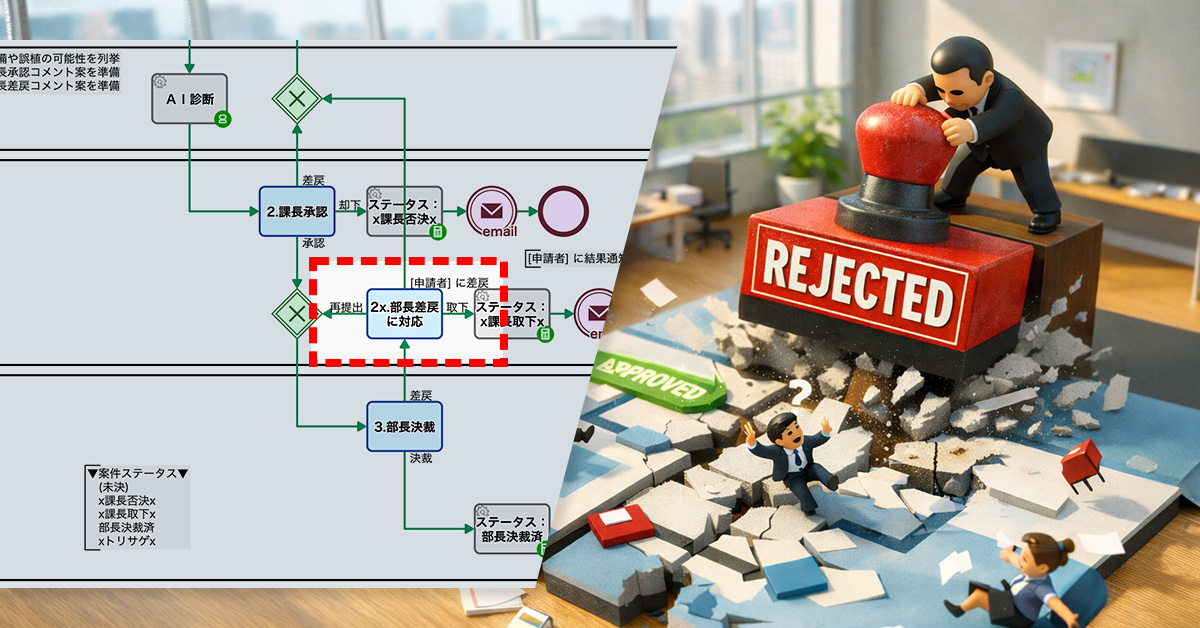
    However, as operations continued, another issue emerged. Cases approved by the section manager were repeatedly rejected by the division manager, the final decision-maker. The division manager could only choose between “approval” and “rejection,” and once rejected, the case was closed at that point.

    This structure created the following problems:

    • Since the reasons for rejection were not shared, the basis for decisions was not accumulated or learned by section managers or the organization as a whole
    • Rejected cases were terminated, requiring applicants to recreate and resubmit them from scratch

    2. Solution: Addition of a return-for-revision route

    The process owner designed a new “return-for-revision route” that allows cases to be sent back from the division manager to the section manager.

    With this design, the division manager can now choose either “approval” or “return for revision” at the decision stage. When returning a case, providing a reason is mandatory, and the case is sent back to the section manager instead of being closed.

    As a result, the section manager can review the reason for return and decide whether to resubmit, request revisions from the applicant, or withdraw the application.

    Sharing clear feedback builds organizational knowledge and improves decision-making.

    Basic Edition
    Advanced Edition
    Professional Edition
    View details of the workflow diagram
    1.Apply

    The applicant initiates a request for equipment purchase. They enter the requested amount and details, and start the approval process.

    AI Assessment

    For the application details, AI checks for possible omissions and formal deficiencies. At the same time, it automatically generates draft comments for the section manager to reference during approval.

    2.Section Manager Approval

    The section manager reviews the application details and decides whether to approve or return it for revision. They make the decision efficiently while referring to the AI-generated comment suggestions.

    3.Division Manager Approval

    The division manager makes the final decision, choosing either approval or rejection.

    Result Notification

    The decision result is automatically notified to the applicant. Whether approved or rejected, the outcome is shared promptly.

    Basic Edition
    Advanced Edition
    Professional Edition
    View details of the workflow diagram
    1.Apply

    The applicant initiates a request for equipment purchase. They enter the requested amount and details, and start the approval process.

    AI Assessment

    For the application details, AI checks for possible omissions and formal deficiencies. At the same time, it automatically generates draft comments for the section manager to reference during approval.

    2.Section Manager Approval

    The section manager reviews the application details and decides whether to approve or return it for revision. They make the decision efficiently while referring to the AI-generated comment suggestions.

    3.Division Manager Approval

    The division manager makes the final decision, choosing either approval or return for revision.

    2x. Respond to division manager’s return (request for revision)

    Based on the feedback returned by the division manager, the section manager can choose to request resubmission from the applicant, resubmit the application, or withdraw it.

    Result Notification

    The decision result is automatically notified to the applicant. Whether approved or rejected, the outcome is shared promptly.

    Before / After comparison (slider can be moved)

    3. Customers Case Study

    4. Other Business Applications

    We will enable AI-based reviews for the following tasks:

    Application to the contract review process

    Application to the investment approval workflow

    Application to the personnel evaluation approval workflow

    5. Related Posts

  • Contract Renewal Email Process Automation

    Contract Renewal Email Process Automation

    Auto-branching by contract length skips unnecessary emails, reducing workload and errors.

    1. Issue: Burden of reviewing the renewal confirmation email list

    A company currently, approximately 30 client companies have outsourcing contracts related to DX promotion support. Contract periods range from one month to about one year, and around 80% of clients renew their contracts. The sales department’s contract management staff send renewal confirmation emails to clients 60 days and 30 days before the contract end date, based on customer information registered in the system.

    These sending schedules are automatically set in advance based on the contract end date. Staff members check the delivery list ყოველდღ and send emails to the relevant clients after confirming there are no errors. However, for contracts with short durations, there is a possibility that renewal confirmation emails may be sent shortly after the contract begins, which is not appropriate.

    Therefore, staff needed to check not only the number of days remaining until the contract end date but also the contract duration each time to determine whether the email should be sent. Since this verification task occurs daily, it created a significant workload and introduced risks of judgment errors and oversight.

    2. Solution: Automatic branching based on contract duration

    The process owner incorporated a branching event before the renewal confirmation email sending step, where a decision is made based on the contract duration.

    Specifically, if the contract period is less than two months, the workflow branches to a route that skips the 60-day prior email sending step. If the contract period is less than one month, it is configured to skip the 30-day prior email sending step as well.

    Automation reduces manual checks and improves contract management efficiency.

    Basic Edition
    Advanced Edition
    Professional Edition
    View details of the workflow diagram
    Customer Registration

    The sales representative registers the customer information.

    x1.Scheduled Sending Date and Time

    The scheduled date and time for sending contract renewal confirmation emails are automatically set based on the registered customer information.

    2.Sending Approval (60 days prior)

    The contract manager reviews the email content and scheduled sending date 60 days before the contract end, and approves the email for sending after confirming there are no errors.

    Pending (60 days prior)

    The process waits until 60 days before the contract end date.

    Send 60-day prior notification email

    Send an email to the customer.

    3.Sending Approval (30 days prior)

    The contract manager reviews the email content and scheduled sending date 30 days before the contract end, and approves the email for sending after confirming there are no errors.

    Pending (30 days prior)

    The process waits until 30 days before the contract end date.

    Send 30-day prior notification email

    Send an email to the customer.

    Basic Edition
    Advanced Edition
    Professional Edition
    View details of the workflow diagram
    Customer Registration

    The sales representative registers the customer information.

    x1.Scheduled Sending Date and Time

    The scheduled date and time for sending contract renewal confirmation emails are automatically set based on the registered customer information.

    Branching

    If the contract period is two months or longer, the process proceeds to the “2. Sending Approval (60 days prior)” route. If it is less than two months, the process moves to the next branching point.

    2.Sending Approval (60 days prior)

    The contract manager reviews the email content and scheduled sending date 60 days before the contract end, and approves the email for sending after confirming there are no errors.

    Pending (60 days prior)

    The process waits until 60 days before the contract end date.

    Send 60-day prior notification email

    Send an email to the customer.

    Branching

    If the contract period is one month or longer, the process proceeds to the “3. Sending Approval (30 days prior)” route. If it is less than one month, the process proceeds to the end.

    3.Sending Approval (30 days prior)

    The contract manager reviews the email content and scheduled sending date 30 days before the contract end, and approves the email for sending after confirming there are no errors.

    Pending (30 days prior)

    The process waits until 30 days before the contract end date.

    Send 30-day prior notification email

    Send an email to the customer.

    You can move the slider

    3. Customers Case Study

    4. Other Business Applications

    We will enable AI-based reviews for the following tasks:

    Automated management of contract renewal notifications

    Subscription contract renewal management

    5. Related Posts

  • Approval Workflow Branch by Amount

    Approval Workflow Branch by Amount

    Amount-based routing reduces bottlenecks by limiting division manager approvals to high-value cases only.

    1. Issue: Decision-making concentrated on the division manager

    In the approval process for equipment purchases, a hierarchical workflow was used in which the applicant submitted a request, the section manager reviewed it, and the division manager made the final decision.

    AI-based checks for errors and the generation of draft comments had been introduced, reducing formal mistakes in applications. However, the approval workflow itself had not been revised, and the division manager consistently remained responsible for the final decision. As a result, the bottleneck in the approval process was not structurally resolved.

    Since all cases, regardless of amount, required the division manager’s approval, requests were constantly concentrated at that level. The division manager had to process a large number of cases in a short time, making it difficult to secure sufficient time for careful review—especially for high-value cases that would normally require more thorough consideration.

    2. Solution: Branching approval routes based on amount thresholds

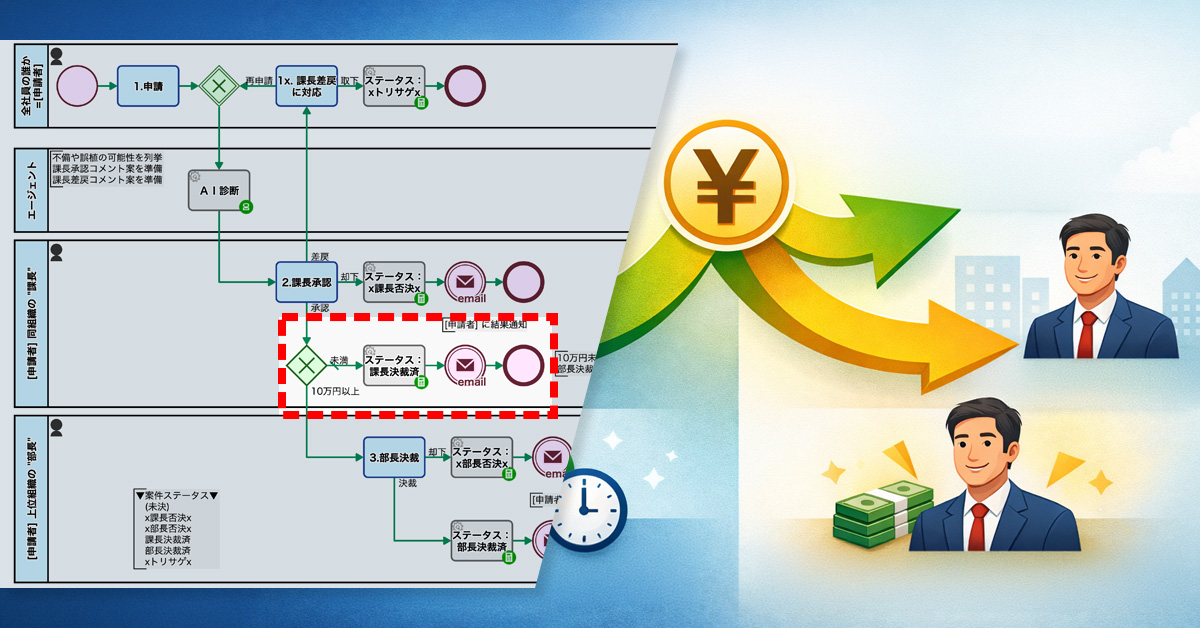
    The process owner incorporated amount-based branching into the approval workflow. The approval route is automatically determined based on the amount entered by the applicant.

    As a result, cases under 100,000 yen are completed with section manager approval, while only cases of 100,000 yen or more proceed to division manager approval.

    Faster processing by completing small cases at the section manager level.

    Basic Edition
    Advanced Edition
    Professional Edition
    View details of the workflow diagram
    1.Apply

    The applicant initiates a request for equipment purchase. They enter the requested amount and details, and start the approval process.

    AI Assessment

    For the application details, AI checks for possible omissions and formal deficiencies. At the same time, it automatically generates draft comments for the section manager to reference during approval.

    2.Section Manager Approval

    The section manager reviews the application details and decides whether to approve or return it for revision. They make the decision efficiently while referring to the AI-generated comment suggestions.

    3.Division Manager Approval

    The division manager makes the final decision.

    Result Notification

    The decision result is automatically notified to the applicant. Whether approved or rejected, the outcome is shared promptly.

    Basic Edition
    Advanced Edition
    Professional Edition
    View details of the workflow diagram
    1.Apply

    The applicant initiates a request for equipment purchase. They enter the requested amount and details, and start the approval process.

    AI Assessment

    For the application details, AI checks for possible omissions and formal deficiencies. At the same time, it automatically generates draft comments for the section manager to reference during approval.

    2.Section Manager Approval

    The section manager reviews the application details and decides whether to approve or return it for revision. They make the decision efficiently while referring to the AI-generated comment suggestions.

    Branching based on amount thresholds

    After the section manager’s approval, the approval route is determined based on the requested amount. Requests under 100,000 yen are completed with section manager approval, while only requests of 100,000 yen or more proceed to division manager approval.

    3.Division Manager Approval (for cases of 100,000 yen or more)

    Only when the requested amount is 100,000 yen or more does the division manager make the final decision. This setup allows the division manager to focus on high-value or exceptional cases.

    Result Notification

    The decision result is automatically notified to the applicant. Whether approved or rejected, the outcome is shared promptly.

    Before / After comparison (slider can be moved)

    3. Customers Case Study

    4. Other Business Applications

    We will enable AI-based reviews for the following tasks:

    Approval workflow for business trip and expense requests

    IT account issuance request

    5. Related Posts

  • 「PDCA サイクル」と「BPM サイクル」は何が違うのか?

    「PDCA サイクル」と「BPM サイクル」は何が違うのか?

    ビジネスプロセスの改善に終わりは来ない。「改善」の先には、また新たな「課題」が見つかる。

    PDCA サイクルって何だっけ?

    「継続的に改善し続ける」という考え方だ。たとえば、次のような違和感はすべて改善テーマになり得る。

    • A. 顧客からクレームが来た
    • B. セールスチームの成果が伸びない
    • C. せっかく内定を出しても辞退されてしまう
    • D. 毎朝「スマホ探し」の時間がかかってしまっている…

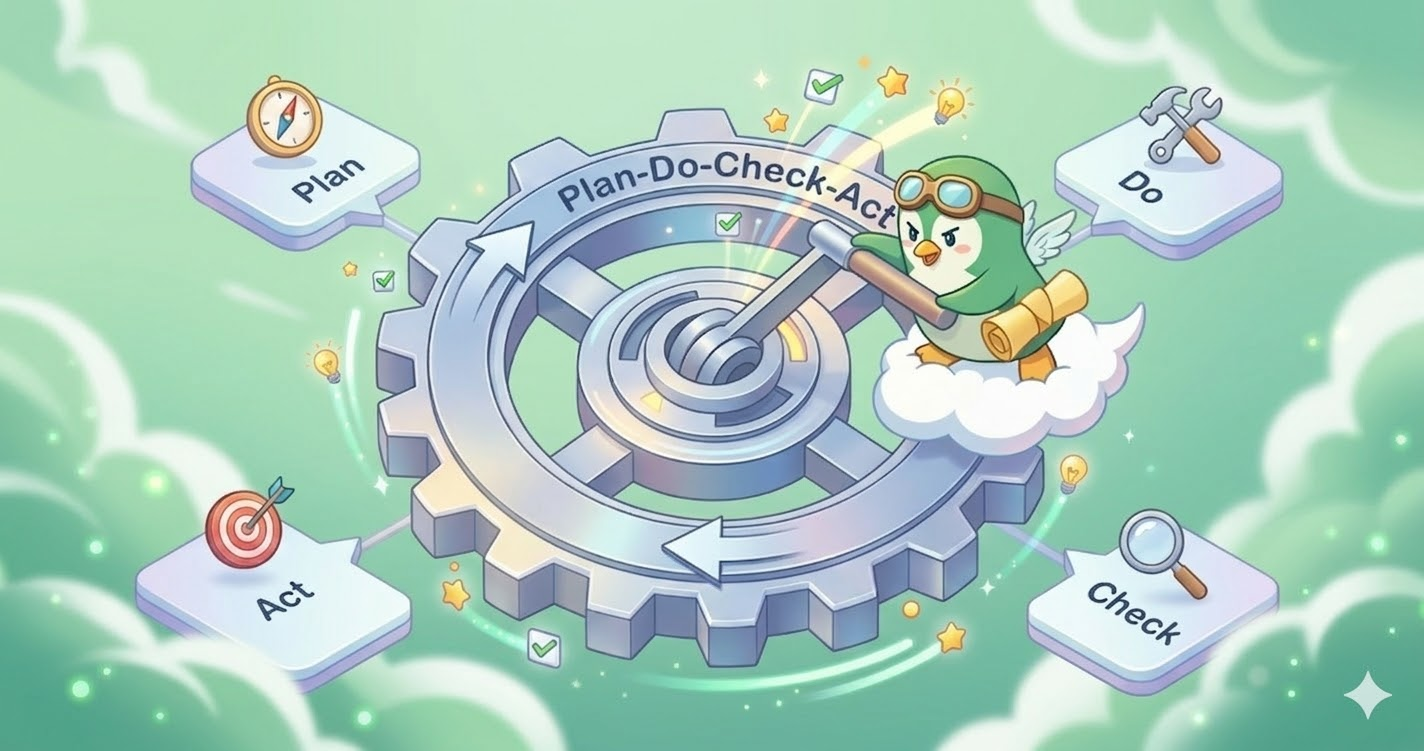
    そして『課題』を感じた瞬間こそが、PDCA プロジェクトを立ち上げるチャンスとなる。(Plan ⇒ Do ⇒ Check ⇒ Act ⇒ Plan ⇒ …)

    改善テーマA: 食品工場の衛生管理

    • Stage.0 (課題設定): 顧客から「毛髪混入」のクレームがあった。食品加工工場としては信頼失墜の危機。再発防止が大目標。
    • Stage.1 (Plan): 「Selfチェックは甘くなる」の仮説を立て、作業者同士がペアを組む「Buddyチェック制度」を設計した。毛髪はみ出しやローラーの掛け残しを互いに確認し合う。30日間の毛髪ゼロが目標。
    • Stage.2 (Do): 一部の工場にて「Buddyチェック制度」を運用し、抜き取り検査を強化した。
    • Stage.3 (Check): 1か月後、検査結果および顧客フィードバックを集計し、毛髪混入ゼロを確認した。なお、副次効果として、互いの身だしなみを確認する文化が生まれ、小さな異常やミスも指摘しやすい雰囲気が醸成された。
    • Stage.4 (Act): 工場の「衛生管理標準」を公式に改訂し「Buddyチェック」を新入社員の教育カリキュラムとして完全に組み込んだ。毛髪以外の異物(作業服の繊維、手袋の破片など)についても管理を強化すべきではないかという議論が生まれ、新たな課題としてチームで認識された。

    改善テーマB: セールス商談の競合負け

    • Stage.0 (課題設定): 失注理由「価格面で競合に負けた」の割合が増加傾向にある。
    • Stage.1 (Plan): 新人メンバが「強みを伝えきれていない」という仮説を立て、「費用対効果が明確化された提案書ひな型」を新たに開発した。「成約率20%→25%」を目標とした。
    • Stage.2 (Do): 一部の営業チームに、新しい提案書ひな型を導入した。同時に、顧客ごとにコスト削減額・業務時間削減を数値で説明するよう徹底した。
    • Stage.3 (Check): 1か月後、商談数・成約率・失注理由を分析した。「価格が高い」という理由での失注は減少しておりROI説明の効果は一定程度確認された。一方で、成約率自体は20%のままであり、価格以外の要因が成約に影響している可能性が示唆された。
    • Stage.4 (Act): 新しい提案書と説明手法を全営業チームに展開し、営業マニュアルに組み込んだ。同時に「そもそも商談昇格の認識にバラツキがある」という新たな課題がチーム内で認識された。

    改善テーマC: 新卒採用の内定辞退

    • Stage.0 (課題設定): 近年、内定辞退率が高い。今年は、予定人数を確保できなかった。
    • Stage.1 (Plan): 「内定後も会社を知ってもらう企画が必要では?」という意見をもとにフォロー施策を企画した。「内定辞退率30%→15%へ」を目標とした。
    • Stage.2 (Do): 内定者に対し「職場見学&社員交流会」というフォロー施策イベントを実施した。
    • Stage.3 (Check): 内定辞退理由を分析した結果、内定辞退率30%→20%で目標には届かなかった。しかし「仕事内容への理解不足」を理由とする辞退は減少した。
    • Stage.4 (Act): フォロー施策イベントを次年度の標準プロセスに組み込んだ。同時に「入社後のキャリアイメージが不明確」という声が一定数あることが分かった。

    改善テーマD: 朝のドタバタ

    • Stage.0 (課題設定): しばしばスマホが行方不明になる。特に朝。布団の中、ソファの隙間、まれに冷蔵庫の上。
    • Stage.1 (Plan): ベッド脇に「スマホ専用トレー」を設置し、使用後は必ずそこに置くルールを設定した。「朝の探索3分→10秒」が目標。
    • Stage.2 (Do): 「ここに置け」と書いたメモをトレーに貼り付けたうえでルールを運用した。
    • Stage.3 (Check): 1か月経過後も、スマホ探索時間ゼロを維持した。朝の出発はスムーズになった。ただ、鍵の行方不明が顕在化した。
    • Stage.4 (Act): トレーを「スマホ・鍵・財布トレー」に拡張し、生活標準プロセスとして正式採用した。しかし、寝る直前までスマホを触れてしまうことが、夜更かしを助長しているのではないか?ひいては朝のドタバタを助長しているのではないか?という新たな課題を感じるに至った。

    もっとも重要な Stage は?

    PDCA サイクルは「次の Plan に繋げる」のが難しい。

    つまり、1回目の「Stage.1 (Plan)」には『課題』(← Stage.0)があった。しかし、2回目の「Stage.1 (Plan)」に『課題』が曖昧になってしまうのだ。 (※ Stage.0 ⇒ Stage.1 ⇒ Stage.2 ⇒ Stage.3 ⇒ Stage.4 ⇒ Stage.1 ⇒ …)

    PDCA が回らなくなってしまう最大原因は『課題の消失』。n周目のStage.4(と Stage.3)は、(n+1)周目の Stage.0 を兼ねているということを自認し続けなければならない。

    BPM サイクルとは?

    「PDCA サイクル」が改善一般のフレームワークであるのに対し、「BPM サイクル」はビジネスプロセスの改善に焦点を当てた考え方だ。(※ Business Process Management)

    「BPM サイクル」も、出発点はやはり『課題』の認識である。

    改善テーマX: 問合対応プロセス

    • Stage.0 (課題設定): 既存顧客から「対応が遅い」とのクレーム。たしかに緊急対応すべき問い合わせだった。
    • Stage.1 (Plan): プロセスオーナーは「CS担当者によって緊急度の認識にバラツキがある」の仮説を立て、「AIによる緊急度自動判定工程」を追加した。AIが「最も緊急度が高い」と判定した問い合わせは「60分以内に一次回答」を目標とした。
    • Stage.2 (Do): すべてのメール問い合わせが「緊急度」で自動分類されるようになった。
    • Stage.3 (Check): 2週間の運用後、一次回答までの所要時間と顧客満足度を分析した。すべての緊急問い合わせが60分以内に回答されていた。所要時間の短縮と顧客満足度の改善を確認した。
    • Stage.4 (Act): 回答担当者からのフィードバックを受け、AI判定の精度向上に取り組んだ。一方で、「緊急度だけでなく難易度も判定されるべき」との意見が上がった。

    改善テーマY: 稟議決裁プロセス

    • Stage.0 (課題設定): ヒューマン工程「課長承認」の滞留時間が長い。意思決定が遅い。
    • Stage.1 (Plan): 「承認コメントや差戻コメントの作文に時間を要しているようだ」とプロセスオーナーは考えた。承認工程の前に「AIが承認・差戻コメントの両方を準備」を追加した。
    • Stage.2 (Do): 「承認コメント案」と「差戻コメント案」がAIによって自動生成されるようになった。課長は、必要に応じて修正して、承認できるようになった。
    • Stage.3 (Check): 2週間の運用後、承認までのリードタイムと滞留時間を分析した。その結果、コメント作成にかかる時間が削減され、特に軽微な案件において承認スピードが向上したことを確認した。
    • Stage.4 (Act): 課長からは「判断の視野が広がった」といった肯定的なコメントが投稿されるようになった。申請者からは「不適切なコメントでは?」といった否定的なフィードバックも散見されるようになった。

    改善テーマZ: Webコンテンツ更新プロセス

    • Stage.0 (課題設定): コピペミスによって、ブログ原稿の「最終章」が無い状態で公開されてしまった。
    • Stage.1 (Plan): プロセスオーナーは「人間コピペ」ではミスは避けられないと判断した。「下書き作成」(WordPress.com)を自動化した。コピペ漏れゼロを目標にした。
    • Stage.2 (Do): ワークフローで承認された原稿(タイトル・本文・抜粋)が WordPress.com の下書き記事として自動登録されるようになった。公開担当者はレイアウトデザインに集中できるようになった。
    • Stage.3 (Check): 1か月経過しても、コピペ漏れや章抜けといった単純ミスは発生しなかった。公開作業の所要時間も大幅に短縮されるようになった。
    • Stage.4 (Act): ブログ原稿以外もこのワークフローが活用されるようになった。公開作業がスムーズになった一方で、文章表現の品質レビューに対する要望が増えた。AIレビューが必要では?という意見も出るようになった。

    改善テーマW: 受注対応プロセス

    • Stage.0 (課題設定): 注文書の内容を手作業で登録している。登録ミスが後を絶たない。
    • Stage.1 (Plan): プロセスオーナーは、注文メール受信で自動的にワークフローが開始されるように変更した。また、AI工程「注文内容抽出」を追加し、注文内容がプリセットされるようにした。「受注登録ミス率10%→4%」を目標とした。
    • Stage.2 (Do): 営業担当の作業は、「注文書の内容」を登録する作業から、「注文書の内容」と「プリセットされた注文内容」を見比べてチェックする作業に変わった。
    • Stage.3 (Check): 商品コード・数量・納期の登録ミスは大きく減り、ミス率は1%に減少した。
    • Stage.4 (Act): 営業担当のフィードバックによれば、「注文内容自体が誤っているケース」があることが分かった。見積内容との照合(差異チェック)を自動化すべきではないかという新たな課題がチーム内で認識された。

    もっとも重要な Stage は?

    「BPMサイクル」でも、『次の課題』を明確にし続けることが大切だ。

    n周目のStage.4(と Stage.3)は、(n+1)周目の Stage.0 を兼ねているということを自認し続けなければならない。

    BPM サイクルには BPM スイートが重要になる

    こうした「BPM サイクル」を現実の業務で回し続けるには、設計・実行・監視・改善を支える基盤が必要になる。

    たしかに「BPM サイクル」を人手だけで回すことは不可能ではない。しかし効率よく回すためには、PDCA の各ステージを支える機能を一式で提供する「BPM スイート」が便利だ。たとえば “Office Suite” は、ドキュメント・表計算・スライドアプリを一式まとめて提供している。

    『Questetra BPM Suite』では、次のような機能を提供している。

    Plan (Design):

    • フロー設計機能: プロセスオーナーは、ビジネスプロセスやビジネスデータをモデリングする。結果、業務の流れやデータ項目が「見える化」される。
      • 分岐設定、メール自動送信設定、メール待ち受け設定、フォーム待ち受け設定、PDF自動生成設定、子プロセス連携設定、ECMAScript処理設定、など
    • 割り当てルール編集機能: プロセスオーナーは、各工程のタスク処理候補者(引き受けルール)を設定する。
    • 業務データ編集機能: 文字列型、数値型、日付型、日時型、ファイル型、テーブル型、など。
    • ※ IT業務統制機能、プロセスデザイン機能などとも呼ばれる。ワークフロー図の定義には国際標準記法 BPMN が活用されることが多い。
    • ※ 単に、モデリング機能、Design-Time 機能、設計機能、開発機能と総称されることもある。

    Do (Execute):

    • リリース機能: プロセスオーナーは、モデル(ワークフローアプリ)を業務システムとして運用し、適宜バージョンアップする。
    • タスク処理機能: 一般社員は、マイタスクを処理する。自分に割り当てられたタスクを、そのまま日常業務として処理できる。
    • ※ 単に、ワークフロー機能、Runtime 機能、実行機能、運用機能と総称されることもある。

    Check (Monitor):

    • 進捗ステータス確認機能: 実行中プロセスの個別の進捗を監視する。今どの工程まで進捗しているのかを把握できる。
    • ヒートマップ機能: 実行中プロセスの全体分布を監視する。今どの工程が渋滞しているのかを確認できる。
    • 実績データ集計機能: 全工程完了プロセスの実績(ボトルネック等)を確認する。次の改善ポイントを見つけやすくなる。
    • ※ 単に、モニタリング機能、ステータスモニタリング機能、パフォーマンスモニタリング機能と総称されることもある。
    • ※ 主に Runtime に活用されるが、次の Design-Time に向けた見直しにも役立つ。

    Act (Optimize):

    • チームチャット機能: チーム内のメンバとチャットできる。要員配置や要員シフトについて議論しやすい。
    • アプリチャット機能: ワークフローアプリと紐づけてチャットできる。改善の気づきを蓄積・共有しやすい。
    • 案件チャット機能: プロセスと紐づけてチャットできる。案件固有の事情を共有しやすい。
    • カスタムチャンネル機能: 特定の話題に絞って議論しやすい。
    • ※ 単に、社内チャット機能と総称されることもある。
    • ※ プロセスオーナーは、進捗状況や実績データをもとに、必要に応じて Runtime におけるリソース配分や担当人数を最適化する。
    • ※ プロセスオーナーは、ワークフローアプリの課題を認識し、次の Design-Time のヒントとする。

    なお、BPM の世界では、「Plan ⇒ Do ⇒ Check ⇒ Act」を「Design ⇒ Execute ⇒ Monitor ⇒ Optimize」と呼称することもある。しかし、それらの本質は変わらない。

    まとめ

    PDCA も BPM も、「課題に気づき、改善を繰り返す」という考え方だ。しかし実際には、その改善は人やチームの意識に依存しやすく、いつの間にか次の課題が曖昧になり、サイクルが止まってしまうことも少なくない。

    とくに BPM の場合は、「ビジネスプロセスそのものを改善する」という、より難易度の高い取り組みになる。業務の流れや役割分担、データの扱いまで含めて見直す必要があり、属人的な運用のままでは継続的に回し続けることは難しい。

    だからこそ、Check(監視)や Act(改善)のステージは、ITシステムによって支えられるべき領域である。プロセスの進捗や実績データを可視化し、ボトルネックや課題を継続的に把握できる環境があってこそ、次の改善につなげることができる。

    BPM スイートは、こうした設計・実行・監視・改善のサイクルを一体として支え、改善を日常業務の中で回し続けるための基盤となる。継続的な業務改善を実現するためには、「気づいたら改善する」のではなく、「改善が回り続ける仕組みを維持する」ことが重要だ。

  •  [Case Study] Nippon Light Metal Streamlines Quality Assurance with Questetra, Eliminating Bottlenecks and Driving Business Process Reform

     [Case Study] Nippon Light Metal Streamlines Quality Assurance with Questetra, Eliminating Bottlenecks and Driving Business Process Reform

     [Release Date: March 24, 2026 / Source: Questetra, Inc.]

    Questetra, Inc. (Headquarters: Nakagyo-ku, Kyoto; CEO: Genichi Imamura), provider of the cloud-based Business Process Management Suite (SaaS BPMS) “Questetra BPM Suite,” has published a case study detailing Nippon Light Metal Company, Ltd.’s (Headquarters: Minato-ku, Tokyo; President: Ichiro Okamoto) successful implementation of their system.

    Nippon Light Metal’s Quality Assurance Group at the Kambara Electrical Material Center has digitized processes previously managed with paper and email, enabling real-time progress tracking. They have already developed around 20 applications, including solutions for complaint handling and blueprint registration, significantly accelerating business improvements driven by employees in the field. We interviewed key personnel to understand the reasons behind the implementation and its specific benefits.

    Case Study Page: https://questetra.com/en/customers/nikkeikin-202602-en/

    Nippon Light Metal Company, Ltd.

    Background: Breaking Down Progress “Black Boxes” and Reducing Data Entry Burden

    The Quality Assurance Group is responsible for managing the quality assurance system, issuing inspection reports, and handling customer complaints. Addressing reported issues requires collaboration across multiple departments.

    Previously, relying on paper and email made it difficult to track progress, leading to a “black box” effect where it was unclear which tasks were stalled, where, and why, resulting in delays. Furthermore, redundant data entry and transcription placed a significant burden on staff.

    Why Questetra: Focusing on Flow Management, Not Just Task Management

    After evaluating various tools to advance business reform through digital transformation (DX), we selected Questetra. A key deciding factor was Questetra’s design philosophy, which emphasizes viewing business processes not simply as record management, but as a continuous flow connecting seamlessly to subsequent stages.

    Nippon Light Metal also highly valued the platform’s flexibility, allowing field personnel to create applications independently without the need for coding skills, and the ability to quickly identify bottlenecks using features like heatmaps and search functions.

    Implementation Results: Empowering Field-Driven Improvement

    Starting with a simple “Attendance Report” application, Nippon Light Metal has now developed approximately 20 applications, including “Defect Notifications”, “Calibration Management”, and “Drawing Registration”, with about 10 currently in active use.

    • Real-Time Progress Tracking:
      Visualizing the status of each process has enabled timely follow-up and effectively identified bottlenecks.
    • Significantly Improved Operational Efficiency:
      Digitalization has reduced the time-consuming tasks of data transcription and cumbersome approval procedures.
    • Empowered Field Improvement Discussions:
      Leveraging web form functions allows them to gather feedback even from workers without a Questetra account, fostering field-driven discussions on continuous improvement.

    About Questetra BPM Suite

    Questetra BPM Suite is a cloud-based Business Process Management System (SaaS BPMS).

    Users can develop and operate workflow systems entirely through a web browser, without requiring any programming knowledge (coding skills). This empowers business departments to continuously improve their business processes independently.

    Typical business processes, such as approval requests, quotation submissions, and inquiry handling, can be created as workflow systems using a no-code approach. Furthermore, integration with generative AI allows for the automation of tasks such as automatic draft document generation and generating draft response proposals.

    Company Info

    Nippon Light Metal Company, Ltd.

    Location

    Minato-ku, Tokyo

    Representative

    Ichiro Okamoto

    Business Activities

    Manufacture and sale of alumina, aluminum hydroxide, various chemicals, and aluminum ingots/alloys. etc.

    Established

    1939

    Questetra, Inc.

    Location

    Nakagyo-ku, Kyoto

    Representative

    Genichi Imamura

    Business Activities

    Development and provision of cloud-based business process management systems (SaaS BPMS)

    Established

    2008

  • 【事例紹介】日本軽金属、「Questetra BPM Suite」の導入で、品質保証の「停滞」を解消。

    【事例紹介】日本軽金属、「Questetra BPM Suite」の導入で、品質保証の「停滞」を解消。

    クラウド型業務プロセス管理システム(SaaS BPMS)「Questetra BPM Suite」を提供する株式会社クエステトラ(本社:京都市中京区、代表執行役CEO:今村 元一、以下、当社)は、 日本軽金属株式会社(本社:東京都港区、代表取締役社長:岡本 一郎、以下、日本軽金属)に対する導入事例インタビューを公開しました

    日本軽金属 蒲原電材センター 品質保証グループは、紙やメールに依存していた業務プロセスをデジタル化し、進捗をリアルタイムに把握できる環境を整備。現在までに、苦情対応や図面登録など約20件のアプリを構築し、現場主導の業務改善を加速させています。  導入の経緯から具体的な効果まで、ご担当者にお話をうかがいました。

    導入事例ページ:https://questetra.com/ja/customers/nikkeikin-202602/

    日本軽金属本社

    導入の背景:進捗の「ブラックボックス化」と転記作業の負担

    品質保証グループでは、品質保証体制の管理、検査成績表の発行、顧客からの苦情・クレーム対応などの業務を行っています。各業務において報告された問題は複数部門と連携しながら改善を推進しています。

    従来は紙やメールでのやり取りが中心だったため、「どの業務が、どこで、なぜ止まっているか」が外部から見えにくく、対応の遅延を招く要因となっていました。また、二重の入力や転記といった非効率な作業も現場の負担となっていました。

    選定理由:業務を「管理」するのではなく「流れとして回す」

    DXによる業務改革を進めるためのツールを検討した結果、Questetraを採用しました。

    決め手となったのは、単なる記録管理ではなく、業務を「流れ(プロセス)」として捉え、確実に次工程へ繋げる設計思想です。

    ノーコードで現場がアプリを自作できる柔軟性に加え、ヒートマップや検索機能で「滞留ポイント」を即座に把握できる点が社内で高く評価されました。

    導入効果:現場が「自分たちの手で」改善を回す仕組みへ

    「出退勤報告」からスモールスタートし、現在は「不具合連絡」「校正管理」「図面登録」など約20件のアプリを作成。うち約10件が実運用されています。

    • 進捗のタイムリーな把握:
      業務状況が可視化され、適切なフォローが可能になったことでボトルネックが明確化。
    • 業務効率の大幅向上:
      デジタル化により、煩雑な転記作業や承認手続きの手間を削減。
    • 現場改善の議論が活発化:
      Webフォーム機能を活用し、アカウントを持たないメンバーからも情報を収集。現場主導で「どう改善すべきか」の議論が生まれています。

    今後の展望:AI工程の組み込みによる更なる高度化

    今後は、若手社員を中心にアプリ開発の輪を広げ、現場主導の改善をさらに定着させていく方針です。また、将来的な展望として、蓄積されたデータのAIエージェント機能による自動分析や、業務の自動化など、さらなる品質向上に向けた仕組みづくりも検討しています。

    Questetra BPM Suiteについて

    Questetra BPM Suite は、クラウド型の業務プロセス管理システム (SaaS BPMS) です。ワークフローシステム(ワークフローアプリ)の開発および運用が、Webブラウザだけで完結します。プログラミングの知識(Codingスキル)は必要ありません。業務部門が主体となって、継続的に業務プロセスを改善できます。

    稟議申請や見積提出、問い合わせ対応などの定型業務プロセスを、ワークフローシステムとしてノーコードで作成できます。さらに、生成AIを組み込むことで、「ドラフト文書の自動生成」や「回答案の草案作成」といった知的作業の自動化も実現できます。

    会社概要

    日本軽金属株式会社

    所在地

    東京都港区

    代表

    代表取締役社長 岡本 一郎

    事業内容

    アルミナ、水酸化アルミニウム、各種化学品、アルミ地金・合金の製造・販売、アルミ板製品、輸送関連製品、電子材料等の製造・販売

    設立

    1939年

    株式会社クエステトラ

    所在地

    京都市中京区

    代表

    代表執行役CEO 今村 元一

    事業内容

    クラウド型業務プロセス管理システム (SaaS BPMS) の開発・提供

    設立

    2008年

    本プレスリリースに関する問い合わせ

    pr@questetra.com or 075-205-5007

  • Nippon Light Metal Co., Ltd.

    Nippon Light Metal Co., Ltd.

    Enhanced Quality Assurance through Visible Progress: A Continuous Improvement Cycle

    Established

    March 30, 1939

    No. of Employees

    2,051 (As of March 31, 2025)

    Main Business

    Alumina, aluminum hydroxide, various chemical products, and aluminum ingots and alloys: manufacturing and sales; aluminum sheet products, transportation-related products, electronic materials, and other products: manufacturing and sales.

    User Department

    Kambara Electric Materials Center, Quality Assurance Group

    Overview of Company and Department Roles

    The Quality Assurance Group at Nippon Light Metal Co., Ltd.’s Kambara Electric Materials Center is responsible for maintaining quality assurance systems, issuing inspection reports, and managing customer complaints. They work closely with other departments, such as Production and Technology, to implement improvements based on identified issues. 

    The ultimate goal is to establish a system that ensures we constantly deliver products that meet our customers’ needs.

    Challenges Before Implementing Questetra BPM Suite

    The Quality Assurance Group is responsible for quickly addressing and correcting operational issues. However, response times were often slow, and problem resolution took considerable time.

    A primary reason for this was the lack of visibility into the progress of individual tasks, making it difficult to share status updates. It was difficult to identify stalled tasks and their specific bottlenecks. Additionally, relying on paper and email for information exchange led to time-consuming and inefficient data entry, transcription, and approval processes.

    Discovery and Selection of Questetra BPM Suite

    As the company proceeded with business reforms through DX, we considered introducing a tool that could visualize business processes.

    Questetra BPM Suite stood out because it not only manages business operations but also transforms them into a flow, enabling continuous process improvement.

    The platform allows us to visualize operations and improve processes, while its no-code flexibility empowers our on-site personnel to design and manage applications. We were also impressed by its ability to quickly identify bottlenecks and improvement areas using heatmaps and process search functions. These factors led to the decision to implement Questetra.

    Solution and Implementation of Questetra BPM Suite

    During the initial implementation phase, a team of five members from the DX Promotion Team spearheaded the effort, starting with an attendance reporting application. Building a system for automatic attendance report tallying helped them grasp Questetra’s basic operations and design principles. This success opened their eyes to Questetra’s potential for improving their everyday tasks.

    Subsequently, the Quality Assurance Group organized operations such as handling complaints, managing calibrations, and registering drawings, systematically converting them into Questetra applications. Questetra provided assistance with some initial application development, which deepened our understanding of modeling methods and design concepts. Now, we are confident in our ability to independently develop applications.

    We have created approximately 20 applications, and about 10 are already in active use. While Questetra currently covers a portion of our overall scope, we intend to expand its reach and transform it into a central mechanism for quality assurance operations.

    Benefits of Implementation

    Questetra has enabled us to visualize the status of our operations, allowing us to respond and follow up promptly with an accurate understanding of progress. This has clarified bottlenecks in execution and helped us identify areas for process improvement. Moreover, transitioning from paper-based and email processes to an online application has significantly improved operational efficiency by reducing time spent on complex data entry and transcription.

    Furthermore, Questetra’s web form functionality allows us to collect information from individuals without Questetra accounts, leading to more active discussions about on-site improvements. In the future, we plan to encourage younger employees to take the lead in application development, further simplifying the reporting and improvement proposal processes, thus expanding field-led improvements.

    Valuable Features of Questetra BPM Suite

    The heatmap and process search functions, providing clear progress visualization, are effectively used to prioritize improvement efforts. The web form function allows us to easily receive reports from team members who do not have Questetra accounts.

    We are also utilizing Questetra’s AI Agent function to add an automatic reply generation feature to our time and attendance application, further enhancing on-site efficiency.

    Looking ahead, we are exploring the implementation of a system that uses AI to automatically aggregate and analyze collected data for quality enhancement purposes.

    Message to Companies Facing Similar Challenges

    Quality assurance and ISO compliance require continuous improvement—not just system implementation. It’s crucial to identify and address business challenges constantly. Starting with small app deployments and accumulating success stories on-site is the first step towards continuous enhancement. 

    Questetra BPM Suite is a tool that not only manages work but also drives it forward, fostering movement and autonomy in the field and naturally accelerating improvements.

    (This case is based on information at the time of the interview.)

  • 日本軽金属株式会社

    日本軽金属株式会社

    進捗の見える化で変わる品質保証。業務改善が回り続ける仕組みへ

    日本軽金属株式会社

    昭和14年3月30日

    2,051名 ※2025年3月31日時点

    アルミナ、水酸化アルミニウム、各種化学品、アルミ地金・合金の製造・販売、アルミ板製品、輸送関連製品、電子材料等の製造・販売

    蒲原電材センター 品質保証グループ

    会社や部⾨の役割について

    日本軽金属株式会社 蒲原電材センターの品質保証グループは、品質保証体制の管理、検査成績表の発行、顧客からの苦情・クレーム対応などの業務を行っています。各業務において報告された問題については、生産グループ、技術グループなど他の部門とも連携ながら、改善を推進しています。

    これらの活動を通じて、顧客からの要求に適合した商品を提供し続けられる体制づくりを目指しています。

    この記事の目次

    Questetra BPM Suite 導⼊前の課題

    品質保証グループは、日々の業務の中で発生する問題に対し、迅速に改善・是正を講じることが求められます。しかし実際には、対応が滞り、問題の解決までに時間を要する状態となっていました。

    その主な原因として、各業務の進捗を可視化・共有できていなかったことが挙げられます。そのため、どの業務がどこで停滞しているのか特定しにくい状況にありました。加えて、情報のやり取りは紙やメールに依存していたため、非効率的な入力・転記作業や承認手続きに多くの時間を費やしていました。

    Questetra BPM Suite を知ったきっかけと選定理由

    DXによる業務改革を進めていく中で、業務プロセスを可視化できるツールの導入が検討されました。

    決め手となったのは、業務を単に「管理する」だけでなく、「流れとして回す」ことで継続的なプロセス改善を実現できる点でした。

    Questetra BPM Suiteは、業務の可視化とプロセス改善を両立できるプラットフォームであり、現場担当者がノーコードでアプリを設計・運用できる柔軟性を備えていました。さらに、ヒートマップやプロセス検索を通じて、業務の滞留や改善ポイントを即座に把握できる点も社内で高く評価され、導入が決定しました。

    Questetra BPM Suiteによる解決と導⼊の流れ

    導入初期は、DX推進チームの5名が中心となり、出退勤報告のアプリ化から取り組みを開始しました。勤怠報告を自動で集計する仕組みを構築し、ツールの基本操作や設計思想への理解を深める中で、通常業務への応用の可能性が見えてきました。

    そうした中、品質保証グループでは苦情・クレーム対応、校正管理、図面登録などの業務を整理し、順次アプリ化を進めていきました。一部のアプリはクエステトラ社の支援を受けて作成しましたが、その過程でモデリング手法や設計の考え方への理解が深まり、現在では自力でのアプリ開発が定着しています。

    現在は約20件のアプリを作成し、試運転等を行っており、そのうち10件ほどが実運用されています。現状ではQuestetraで実現できる範囲は全体の一部にとどまりますが、今後は対象業務を拡大し、品質保証業務の中核的な仕組みへと発展させていく予定です。

    導入効果

    Questetraの導入により業務状況が可視化され、進捗をタイムリーに把握しながら、適切な対応やフォローが行えるようになりました。これにより、業務遂行上のボトルネックが明確になり、業務プロセス改善に向けた課題を把握できるようになりました。また、紙やメールを中心とした従来の運用からアプリへ移行したことで、煩雑だった入力や転記の手間が削減され、業務効率が大幅に向上しました。

    さらに、QuestetraのWebフォーム機能を活用することで、Questetraアカウントを持っていないメンバーからの情報も吸い上げることができるようになり、現場改善のための議論が活発化しました。今後は、若手社員が中心となってアプリ開発に参加し、報告や改善提案のハードルを下げながら、現場主導の改善をさらに広げていく方針です。

    Questetra BPM Suiteの便利な機能

    進捗を可視化できるヒートマップやプロセス検索機能は、改善の優先順位を判断する際に有効に活用されています。また、Webフォーム機能を活用することで、Questetraアカウントを持っていないメンバーからの報告をスムーズに受け付けられるようになりました。
    さらに、AIエージェント機能を活用し、勤怠アプリに返信文の自動生成機能を追加するなど、現場業務の効率化も進めています。API連携を必要とせず、ワークフロー内にAIを組み込める点も、Questetraならではの強みとして評価されています。
    今後は、蓄積されたデータをAIで自動集計・分析し、品質改善に活用する仕組みの導入を検討しています。

    同様の課題を抱える企業へのメッセージ

    品質保証やISO対応業務は、仕組みを作るだけでは定着しにくく、継続的な改善が必要な領域です。業務の中の課題を見つけ出し、それを解決していくことが常に求められます。小さな業務からアプリ化を始め、現場で「自分たちの手で改善できる」という成功経験を積み重ねることが、継続的な改善への第一歩になります。

    Questetra BPM Suiteは、業務を「管理」するだけでなく「流す」ことで、現場に動きを生み出すツールです。現場が自律的に動き始めることで、改善は自然と加速していきます。

    ※ 本事例は取材当時の情報です。

    同業種の導入事例

    • 日本軽金属株式会社
      日本軽金属株式会社

      進捗の見える化で変わる品質保証。業務改善が回り続ける仕組みへ

    • 本田技研工業株式会社
      本田技研工業株式会社

      総務申請、研修受付、社用車利用など、事務処理全般で利用。DXで業務の断捨離と効率化を実現。

    • NKKスイッチズ株式会社
      NKKスイッチズ株式会社

      ワークフローアプリで、タスクの受渡しを自動化。多くの部署/担当者が関わる業務の可視化が実現。

    • 三信電気株式会社
      三信電気株式会社

      年間350件の受発注業務と年間1,500件の申請業務をペーパーレス化。入力ミスや手間を軽減し、管理コストの50%を削減。

  • 「親アプリ」から「子アプリ」を呼び出す方法

    「親アプリ」から「子アプリ」を呼び出す方法

    ワークフローアプリ間の連携

    Questetra BPM Suite では、

     「ワークフローアプリX」(親アプリ)の途中で、
     「ワークフローアプリY」(子アプリ)を呼び出す

    という形で、ワークフローアプリ同士を連携させることができる。

    • Step1. 子アプリに[メッセージ開始イベント(HTTP)]を配置し、アプリを予め稼働(リリース)させておく。
    • Step2. 親アプリに[サービスタスク(子プロセス開始)]を配置、呼び出す子アプリを指定し、アプリを稼働(リリース)させる。

    利用するモデリング要素

    〈サービスタスク(子プロセス開始)〉

    • 送信するデータ項目を指定するだけで、ワークフローアプリ同士の連携を簡単に実現できる。

    〈メッセージ開始イベント(HTTP)〉

    • HTTP リクエストを受信すると新規プロセスが自動的に開始される。

    ※[メッセージ送信中間イベント(HTTP)]を用いる方法もあるが、本記事では触れない。

    連携させる理由

    「ワークフローアプリ同士を連携させる理由」(ワークフローアプリを分割する理由)は様々だ。主な理由は次の6つ。

    1. フローの可視性

    大きなフローを小さな単位に分けることで、個々のフロー図がシンプルになり、関係者が理解しやすくなる。

    2. データの共通化

    親プロセスの業務データが子プロセスへ自動転記されるため、入力ミスのリスクを削減できる。

    3. フローの再利用性

    よく使う手順(例:法務審査、翻訳、検品)を子アプリ化しておくことで、複数の親アプリから利用できるようになる。

    4. スケーラビリティ

    親アプリ内のループ構造から子プロセスが複数起動される設定にすれば、「1対多」の親子関係を容易に実現できる。

    5. 責任範囲の明確化

    親アプリ「請求フロー」を営業部に担当させ、子アプリ「入金確認フロー」を経理部に担当させる等、データ閲覧権限やプロセス改善責任を切り分けられる。

    6. トラブル隔離とリトライの簡素化

    子プロセスがエラーになった場合でも、子プロセスだけ再実行できるようになる。障害対応負荷を下げることができる。

    具体的な利用例

    親アプリ

    子アプリ・孫アプリ

    子プロセスの終了を待機する/しない

    ブログ制作フロー

    翻訳フロー

    待機する

    Webコンテンツ制作フロー

    翻訳フロー

    待機する

    契約プロセス

    法務チェックプロセス

    待機する

    請求フロー

    入金確認フロー

    待機しない

    配信リスト設定プロセス(ループ構造/再帰呼出構造)

    メール配信プロセス

    待機しない

    問合受信プロセス

    問合回答プロセス(子アプリ)

    待機しない

    問合受信プロセス

    FAQ改廃プロセス(孫アプリ)

    待機しない

    このように、ワークフローアプリを適切に分割して連携させることで、可視性・再利用性・運用性の高いプロセス設計が可能になる。 Business Process Management バンザイ!

  • 契約条件でメール送信を自動分岐

    契約条件でメール送信を自動分岐

    顧客への契約更新メールは、契約期間ごとに担当者が送信要否を判断していた。その結果、負担が大きく、抜け漏れが発生しやすい状態に。契約期間で自動分岐する仕組みを導入し、業務効率向上とミス防止を実現した。

    1. 課題:更新確認メールリストの確認負担

    DejiDejiコンサルティング社は、現在、約30社の顧客企業とDX推進支援に関する業務委託契約を締結しています。契約期間は1か月から1年程度で、そのうち約8割の顧客が契約を更新しています。営業部の契約管理担当者は、システムに登録された顧客情報をもとに、契約終了の60日前および30日前に更新意思確認のメールを顧客へ送付しています。

    これらの送信タイミングは、契約終了日を基準にあらかじめ自動で設定されており、担当者は毎日配信リストに誤りがないかを確認したうえで、対象顧客へメールを送付しています。しかし契約期間が短い案件では、契約開始直後に更新確認メールが送付される可能性があり、適切ではありません。

    そのため担当者は、契約終了までの日数に加えて契約期間も確認し、送信対象かどうかを都度判断する必要がありました。この確認作業は日常的に発生するため作業負担が大きく、判断ミスや確認漏れのリスクも生じていました。

    2. 解決策:契約期間に応じた自動分岐

    プロセスオーナーは、更新確認メール送信工程の前に、契約期間を条件とした判定が行われる分岐イベントを組み込みました。

    具体的には、契約期間が2か月未満の場合は60日前メールの送信工程を通らないルートへ分岐させ、契約期間が1か月未満の場合は30日前メールの送信工程も通らないように設定しました。

    Basic Edition
    Advanced Edition
    Professional Edition
    ワークフロー図詳細を見る
    1.顧客登録

    営業担当者が顧客情報を登録します。

    x1.送信予定日時

    登録された顧客情報から契約更新の意思確認メール送信予定予定日時の情報が自動でセットされます。

    2.送信承認60日前

    契約担当者が契約終了60日前に、メールの内容や送信日に誤りがないか確認し、メール送信の承認を行います。

    待機60日前

    プロセスは60日前まで待機します。

    60日前通知メール送信

    顧客にメールを送信します。

    3.送信承認30日前

    契約担当者が契約終了30日前に、メールの内容や送信日に誤りがないか確認し、メール送信の承認を行います。

    待機30日前

    プロセスは30日前まで待機します。

    30日前通知メール送信

    顧客にメールを送信します。

    Basic Edition
    Advanced Edition
    Professional Edition
    ワークフロー図詳細を見る
    1.顧客登録

    営業担当者が顧客情報を登録します。

    x1.送信予定日時

    登録された顧客情報から契約更新の意思確認メール送信予定予定日時の情報が自動でセットされます。

    分岐

    契約期間が2か月以上の場合は「2.送信承認60日前」のルートへ進む。2か月未満の場合は次の分岐ポイントへ進む。

    2.送信承認60日前

    契約担当者が契約終了60日前に、メールの内容や送信日に誤りがないか確認し、メール送信の承認を行います。

    待機60日前

    プロセスは60日前まで待機します。

    60日前通知メール送信

    顧客にメールを送信します。

    分岐

    契約期間が1か月以上の場合は「3.送信承認30日前」のルートへ進む。1か月未満の場合は終了へ進む。

    3.送信承認30日前

    契約担当者が契約終了30日前に、メールの内容や送信日に誤りがないか確認し、メール送信の承認を行います。

    待機30日前

    プロセスは30日前まで待機します。

    30日前通知メール送信

    顧客にメールを送信します。

    中央のバー操作で Before / After が比較できます

    3. 効果

    契約管理業務の効率向上

    契約期間の確認と送信可否の判断を自動化したことで、担当者の確認作業が削減され、日々の契約管理業務を効率的に進められるようになりました。

    判断ミスの防止による運用安定化

    メール送信の可否をシステムが判定することで、担当者の経験や判断に依存しない安定した契約管理が実現しました。

    適切なタイミングでの顧客連絡の実現

    契約期間が短い案件への不要な更新確認メールを防ぎ、顧客とのコミュニケーションの適切性が向上しました。

    4. その他の業務への応用

    契約更新通知の自動管理

    契約期間や契約条件に応じて通知対象を自動判定する仕組みを導入することで、契約管理業務全体の効率化が期待できます。

    サブスクリプション契約の更新管理

    更新期限や解約期限をワークフローで管理することで、更新案内や顧客フォロー業務を自動化できます。

    顧客フォロータイミング管理

    契約期間や利用状況に応じてフォロー連絡のタイミングを自動判定することで、営業活動の質と効率の向上につながります。

  • BPM的リーダーシップ論

    BPM的リーダーシップ論

    • “管制塔” が指示を出さなくなったら、空はすぐに事故る。
    • “オーケストラ指揮者” が指揮棒を振らなくなったら、曲は崩れる。
    • “プロジェクトリーダー” がゴールを定めなくなったら、成果は出ない。

    AIは進化する。しかし、意思決定の責任は委譲できない。

    部長課長心得

    チームとしての「成果責任」と向き合おう!

    即応する

    • メンバ Output は1時間以内に目を通す。
    • 当日中にフィードバックし、組織のリズムを止めない。
    • 不備の芽があれば即時に指摘する。

    計測する

    • KGI・KPIを徹底して追う。
    • KPI 以外の指標も積極的/挑戦的に測定してみる。
    • 他部署他部門から見て説明可能な状態を保つ。計測結果は隠さない。

    研鑽する

    • チームの強みと弱み、市場のトレンドと脅威を認識する。
    • その上で、チームとしてのスキルアップに責任を持つ。
    • すべてのレビューが作業時間の10%以内に抑えられるよう、スキルアップを推進する。

    プロセスオーナー心得

    業務プロセスの「風化や劣化」と向き合おう!

    定義する

    • 業務プロセス(ワークフローアプリ)の存在意義を明確にし、必要に応じて再定義する。
    • 業務プロセスの Output 定義は、ニーズや状況に応じて再定義する。
    • 未定義フロー・例外インスタンスを文書化しておく。

    監視する

    • 現状把握と業績集計は、自動化する。チーム全員と共有する。
    • 滞留・逸脱・エラー検知を自動化する。
    • エラー発生をヒトのせいにせず、プロセス改善につなげる。

    改善する

    • 継続的に改善する。「小さな改善」で構わない。
    • 品質向上や時短が見込める時は、躊躇なく改訂する。
    • 悪化させてしまった場合は勇気をもってロールバックする。

    リーダーシップの本質

    部長や課長は「人を率いる」。プロセスオーナーは「仕組みを統治する」。

    人は感情で揺れる。仕組みは放置で劣化する。

    いずれも、

    • 戦略 (目的設計と方針決定)
    • 戦術 (手段構築と資源運用)
    • 作戦 (計画立案と実行統制)

    を明確化して、再現性を高めるべきだ!

  • 自分の申請を自分で承認?

    自分の申請を自分で承認?

    物品購入申請に「課長起案ルート」を追加。課長の自己承認を省略し、部長決裁へ直接進めることで、手続きの停滞防止とリードタイム短縮を図ります。

    1. 課題:課長起案時に発生する自己承認の手間

    SakuSaku商事では、物品購入の稟議に「申請 → 課長承認 → 部長決裁」の階層型承認フローを運用していました。この承認フローでは、課長自身が起案者となる案件においても一律で同じルートを通るため、「課長が自分の申請を自分で承認する」という状況が発生していました。

    このことは、課長にとっては実質的な意味を持たない無駄な手間となっていました。

    2. 解決策:課長用の申請開始ポイントを追加

    プロセスオーナーは、課長が申請を開始できる専用の開始ポイントをワークフローに追加しました。

    プロセスモデルでは、スイムレーン「課長ロールの誰か」を新設し、そのレーンにヒューマンタスク「課長申請」を配置しました。課長が起案する場合は、この工程から申請を開始します。

    「課長申請」から開始された案件は課長承認工程を経由せず、部長決裁へ直接進みます。

    Basic Edition
    Advanced Edition
    Professional Edition
    ワークフロー図詳細を見る
    1. 申請

    社員が物品購入の申請を行います。

    AI診断

    申請内容をAIが診断します。不備や誤記の可能性、課長の承認コメント案・差戻コメント案を提示します。

    2. 課長承認

    課長が申請内容を確認します。差戻の場合は申請者が修正して再申請します。承認された場合は部長決裁へ進みます。

    3. 部長決裁

    部長が最終判断を行います。決裁または否決の結果は申請者にメールで通知されます。

    Basic Edition
    Advanced Edition
    Professional Edition
    ワークフロー図詳細を見る
    1. 申請

    社員が物品購入の申請を行います。

    AI診断

    申請内容をAIが診断します。不備や誤記の可能性、課長の承認コメント案・差戻コメント案を提示します。

    2. 課長承認

    課長が申請内容を確認します。差戻の場合は申請者が修正して再申請します。承認された場合は部長決裁へ進みます。

    1b. 課長申請

    課長自身が起案する場合は、部長決裁へ直接進みます。

    3. 部長決裁

    部長が最終判断を行います。決裁または否決の結果は申請者にメールで通知されます。

    中央のバー操作で Before / After が比較できます

    3. 効果

    申請処理の待ち時間の削減(スピード)

    課長が起案した申請は課長承認工程を経由せずに部長決裁へ進むため、申請から次工程までの待ち時間が発生しません。これにより、申請手続きのリードタイムが短縮されます。

    課長の形式的な承認作業を削減(負荷)

    課長による自己承認が不要となるため、通知確認や承認操作といった形式的な作業がなくなります。これにより、課長の作業負荷が軽減されます。

    申請と承認の役割の明確化(統制)

    課長が起案した申請は課長承認工程を通らないため、課長の業務は「部長への申請」と「部下の申請に対する承認」に分かれます。これにより、申請と承認の責任範囲が明確になります。

    4. その他の業務への応用

    稟議・決裁ワークフロー

    起案者の役職と承認者が重複する場合、開始ポイントや分岐ルートを分けることで、不要な承認工程を回避できます。

    経費精算

    マネージャーが申請者となる場合に、同一人物の承認工程が発生しないよう申請ルートを分けることで、承認フローを整理できます。

    プロジェクト申請

    プロジェクト責任者が起案する場合も、役割ごとに開始ルートを用意することで、承認構造の重複を避けたプロセス設計が可能です。