
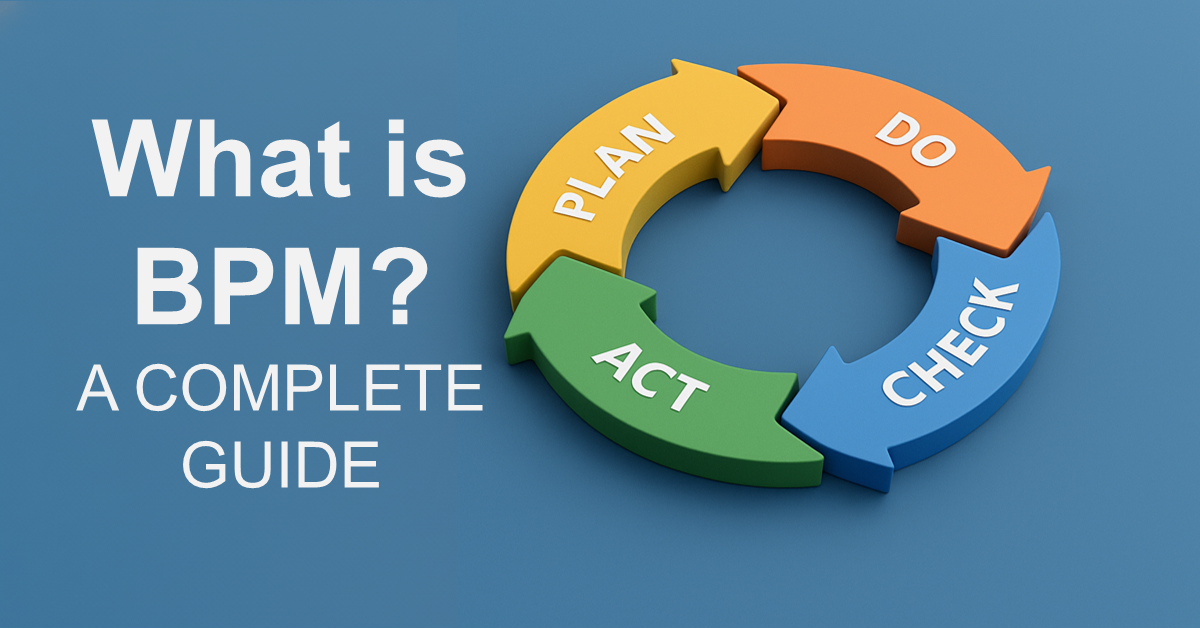

In a business context, BPM stands for “Business Process Management”. This is a strategy focused on continuously optimizing a company’s or an organization’s processes, which has gained attention recently for enhancing corporate competitiveness.
BPM goes beyond simply revising procedures. It aims to visualize the challenges faced by an entire organization and builds mechanisms for consistent quality improvements and cost reductions. By modeling and monitoring business processes and continuously improving them, companies can expect growth and an increase in customer satisfaction.
This article provides a comprehensive look at BPM, from its fundamental concepts to how it differs from BPR, along with the benefits and specific steps for implementation. It includes practical information to aid in business transformation, so please read it for reference.
Table Of Contents
Basic Concepts of BPM and Its Importance in Business
BPM encompasses a comprehensive approach to business processes, optimizing the entire flow to enhance corporate competitiveness.
BPM (Business Process Management) is a management technique to organize and visualize a sequence of tasks and workflows within an organization and repeatedly improve them. Unlike traditional methods aiming for isolated optimization, BPM offers a comprehensive view of the operational flow, reducing unnecessary steps and communication losses to achieve overall process optimization. This enables organizations to swiftly address challenges and adapt flexibly to changes in customer needs and external environments.
Implementing BPM is not just about efficiency; it’s crucial to establish a foundation for inter-organizational collaboration and information sharing. By making process interconnections more visible, organizations can clarify departmental responsibilities and resource allocation, leading to unified awareness across the company and enhanced overall outcomes.
Thorough Comparison of BPM and BPR
Understanding the differing purposes and approaches of BPM and BPR is essential when implementing these strategies.
While both terms relate to business transformation, BPM refers to a continuous and phased methodology for managing and improving processes, whereas BPR (Business Process Re-engineering) implies a more radical transformation approach. BPM focuses on incremental changes to move towards goals, while BPR typically involves a bold redesign of entire business processes to achieve revolutionary change.
Objectives and Features
BPM emphasizes continuous process optimization through phases resembling a PDCA cycle, focusing on gradually resolving current issues. In contrast, BPR often involves fundamentally reconstructing business operations for a full redesign of existing systems. It’s crucial to realize that neither approach is superior; the most appropriate method depends on an organization’s current situation and business strategy.
Three Reasons to Pursue BPM
BPM serves as an effective strategy for adapting to ever-changing business environments and enhancing overall business performance.
To prevail in diverse business landscapes, companies must consistently enhance internal efficiency while flexibly responding to external changes. Implementing BPM allows businesses to make their operations visible, fostering an environment where frontline and management can collaboratively undertake continuous improvements.
Quick Response to Environmental Changes
With BPM, processes are always clearly defined, making it easier to identify necessary adjustments and understand their overall impact when new requirements or issues arise. This capability allows firms to adapt ahead of competitors, mitigating the risk of missing out on business opportunities.
Visibility and Standardization of Operations
When organizational workflows are made visible through modeling, it becomes easier to spot redundant tasks or duplicate processes. Proceeding with standardization based on this visibility ensures consistency, even with changes in personnel, facilitating knowledge sharing and smooth transitions.
Enablement of Continuous Process Improvement
If processes are left unrefined once established, they risk becoming problematic over time. BPM promotes regular review and improvement, akin to a PDCA cycle, ensuring continuous optimization. This ongoing initiative is crucial for maintaining organizational productivity and competitive edge.
Five Benefits of BPM
The benefits of embracing BPM are extensive, contributing to improvements in workflow quality and organizational collaboration, with numerous expected impacts.
Implementing BPM leads to process optimization, which reduces overall costs and enhances work quality while enabling seamless integration during system implementation. These achievements can create new value and improve evaluations from customers and business partners.
Cost Reduction through Overall Optimization
Viewing the entire business landscape often reveals duplicated efforts or waste. By implementing BPM, areas of loss can be eliminated, clarifying the focal points for resource concentration, thereby facilitating cost reduction and efficient human resource allocation.
Quality Improvement and Error Reduction
Standardized processes reduce discrepancies in understanding among team members, minimizing rework and errors. Ultimately, this helps prevent delays and customer complaints, increasing trust in the quality of services and products.
Facilitating Business Process Changes
Visualized process models in BPM serve to quickly assess the impact of changes. This aids in gaining understanding among relevant departments and stakeholders, allowing smooth business redesign without significant disruption.
Promotion of IT Tools and System Integration
Before introducing systems or tools, organizing current workflows and eliminating unnecessary processes help avoid large-scale system overhauls. Analyzing processes to make optimal IT investments maximizes the effectiveness of implementation.
Strengthening Inter-Organizational Collaboration
Even when work spans multiple departments, BPM facilitates cross-functional information sharing, clarifying departmental roles and responsibilities. This minimizes collaboration errors and fosters more robust teamwork in business execution.
Basic Functions of BPM Systems and Tools Implementation
Systems and tools supporting BPM come equipped with functions to facilitate visualization, analysis, and improvement of processes.
BPM support tools provide essential solutions for the continuous management and optimization of business processes. Combining features such as modeling, simulation, and real-time monitoring, they connect field operations with business strategy.
Modeling Functionality
The modeling function visualizes organizational tasks as process diagrams that can be shared among all members. Understanding the overall process flow and related departments becomes easier, facilitating awareness sharing and swift extraction of points for change.
Simulation Functionality
The simulation function allows virtual assessment of predicted risks or benefits from workflow changes before actual implementation. This minimizes impact on operational burden and cost while aiding in identifying optimal improvement plans.
Monitoring Functionality
This feature monitors the progress and quality indicators of processes in real-time, enabling early detection of abnormalities or bottlenecks. It aligns proactive operations, preventing issues before they arise rather than dealing with them reactively.
Steps for Implementing BPM
Effective BPM implementation requires clear purpose setting and a phased approach.
Success lies not in randomly reviewing tasks but in first clarifying challenges and priorities. By following practical steps, stakeholder consensus and consistency in process management cycles are maintained.
Step1:Analyzing and Prioritizing Target Processes
The initial stage involves identifying process flows and visualizing where qualitative or quantitative issues may be hiding. By prioritizing areas with a significant business impact or high potential improvement, early realization of benefits is ensured.
Step2:Redesigning Challenges and Planning Concrete Measures
Focus on high-priority tasks to determine root causes and explore how a redesign can solve any problems. The key is to draft specific measures, which may include IT tool utilization or organizational restructuring and define concrete workflows and responsibilities for the implementation stage.
Step3:Operating and Validating Improved Processes
Operate the redesigned processes in practice and confirm actual results or issues. Often, unforeseen challenges arise in the initial implementation phases, making it crucial to utilize monitoring functions and feedback for thorough operational validation.
Step4:Continuous Evaluation and Process Improvement
Avoid abandoning implemented processes; conduct regular evaluations and adjust as necessary to achieve BPM’s core principle of continuous improvement. Rooting this practice within organizational culture allows for strong resilience to environmental changes.
Important Considerations for BPM Implementation
Successful BPM implementation requires internal consensus and consistent commitment to the initiative.
Collaboration and understanding from stakeholders are fundamental. Particularly for departments resistant to change or where personnel burdens are unevenly distributed, foresight and appropriate measures are essential.
Necessity of Forming Common Organizational Understanding
BPM often involves multiple departments, making shared goals and understanding crucial for success. Aligning recognition from both top-down and bottom-up aspects helps minimize post-implementation confusion and enables smooth transformation.
Thoroughness of the PDCA Cycle
BPM demands ongoing evaluation and improvement beyond the initial implementation. By adhering to the PDCA cycle—Plan, Do, Check, Act—effectiveness increases and instills a long-term, reformative business perspective.
Summary and Conclusion
The BPM approach offers significant power in achieving sustainable growth and transformation by visualizing and improving core business processes.
BPM, which revises operations from a holistic perspective beyond individual optimization, enhances flexibility and adaptability—an approach worth considering for many businesses. Shared understanding and the PDCA cycle’s thorough application are essential, but the benefits reaped justify these efforts. As the business environment evolves, proactive BPM adoption and usage can sustain continuous growth. Consider successful BPM implementation as an advantageous strategy for ongoing development.
Accelerating BPM Practice through Tool Implementation
To embed BPM concepts into daily operations and achieve sustainable improvement, utilizing a suitable BPM platform is vital. Questetra BPM Suite is a cloud-based BPM tool supporting process design, execution, analysis, and improvement end-to-end. It enables seamless cross-departmental collaboration, promotes standardization, and ingrains the PDCA cycle, all without writing code.
We currently offer a 60-day free trial. Consider us a partner in your business transformation journey.